Meet the Marine life of Cook Island.
Cook Island Marine Reserve is one of Australia's most biodiverse underwater worlds. Here's everything that might greet you beneath the surface.
A protected world
beneath the waves
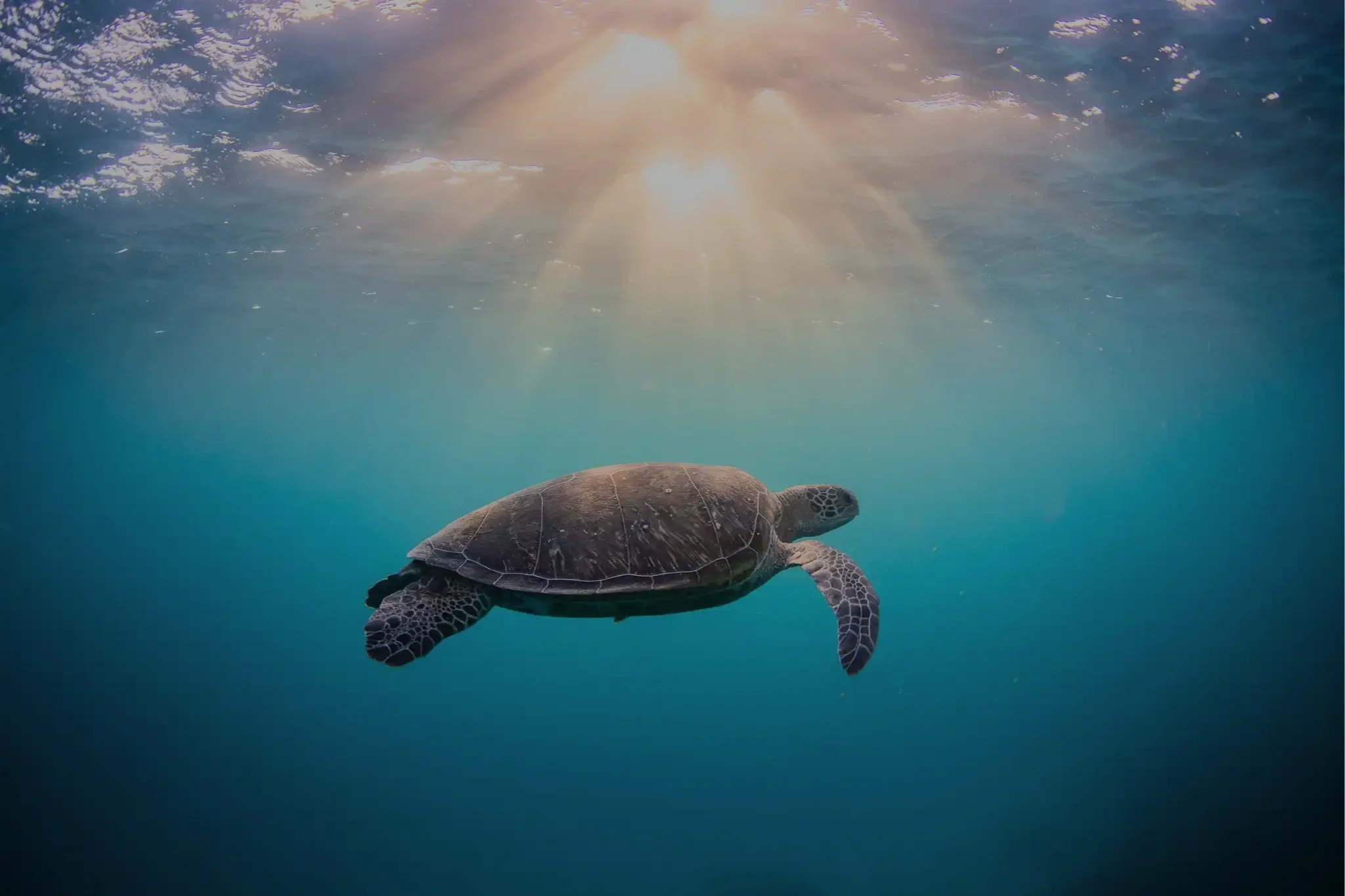
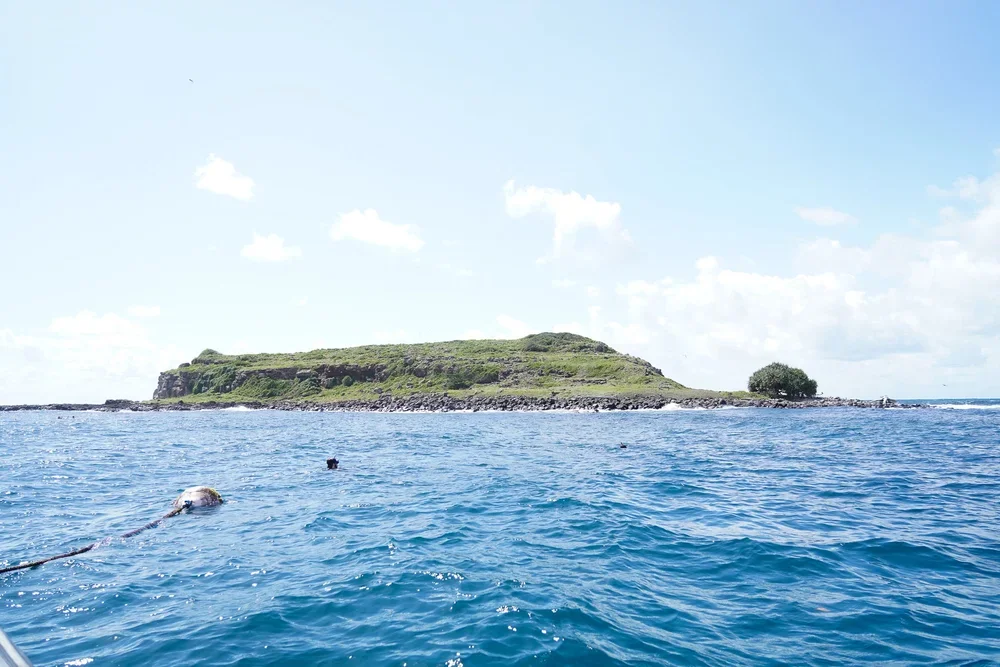
Cook Island Aquatic Reserve sits just off Fingal Head on the NSW far north coast. Established to protect its extraordinary marine biodiversity, the island's waters are home to one of the densest populations of resident sea turtles in Australia along with wobbygongs, rays, eels, and hundreds of reef fish species.
Because access to the island itself is restricted, the reef has remained pristine for decades. Snorkelling here feels like stepping into a nature documentary only better, because it's real.
200+
Fish species recorded
10+
Turtles per average tour
15m
Visibility on good days
ABOUT THE DESTINATION
Cook Island — the place behind the adventure.
Before you dive in, here's the story of the remarkable little island you're visiting its ancient origins, its human history, and why it's one of the most protected stretches of ocean on the east coast of Australia.
A BRIEF HISTORY
🌋 ~20 Million Years Ago
Born from a volcano
Cook Island was formed by lava flows from the Mount Warning Shield Volcano the same ancient eruption that shaped the Gold Coast hinterland. The distinctive basalt columns you see today are 20 million years old
🪃 Thousands of Years
Home of the Bungjalung people
The island was known to the Bungjalung people as Joongurra-Narrian "the place of pelicans." The Minjungbal people have called this coastline home for thousands of years.
⚓ 16 May 1770
Captain Cook sails past
Lieutenant James Cook, on his first Pacific voyage aboard HM Bark Endeavour, sighted and charted the island. It was later named in his honour. Just to the north, Fingal Head was named for its resemblance to Fingal's Cave in Scotland.
🐢 1823
First called "Turtle Island"
Explorer John Oxley visited and found the island teeming with sea turtles so many that he named it Turtle Island. Two centuries later, the turtles are still there.
🌊 23 October 1998
Declared a protected Marine Reserve
Cook Island was officially gazetted as an Aquatic Reserve under the NSW Fisheries Management Act 1994 protecting its extraordinary biodiversity for future generations.
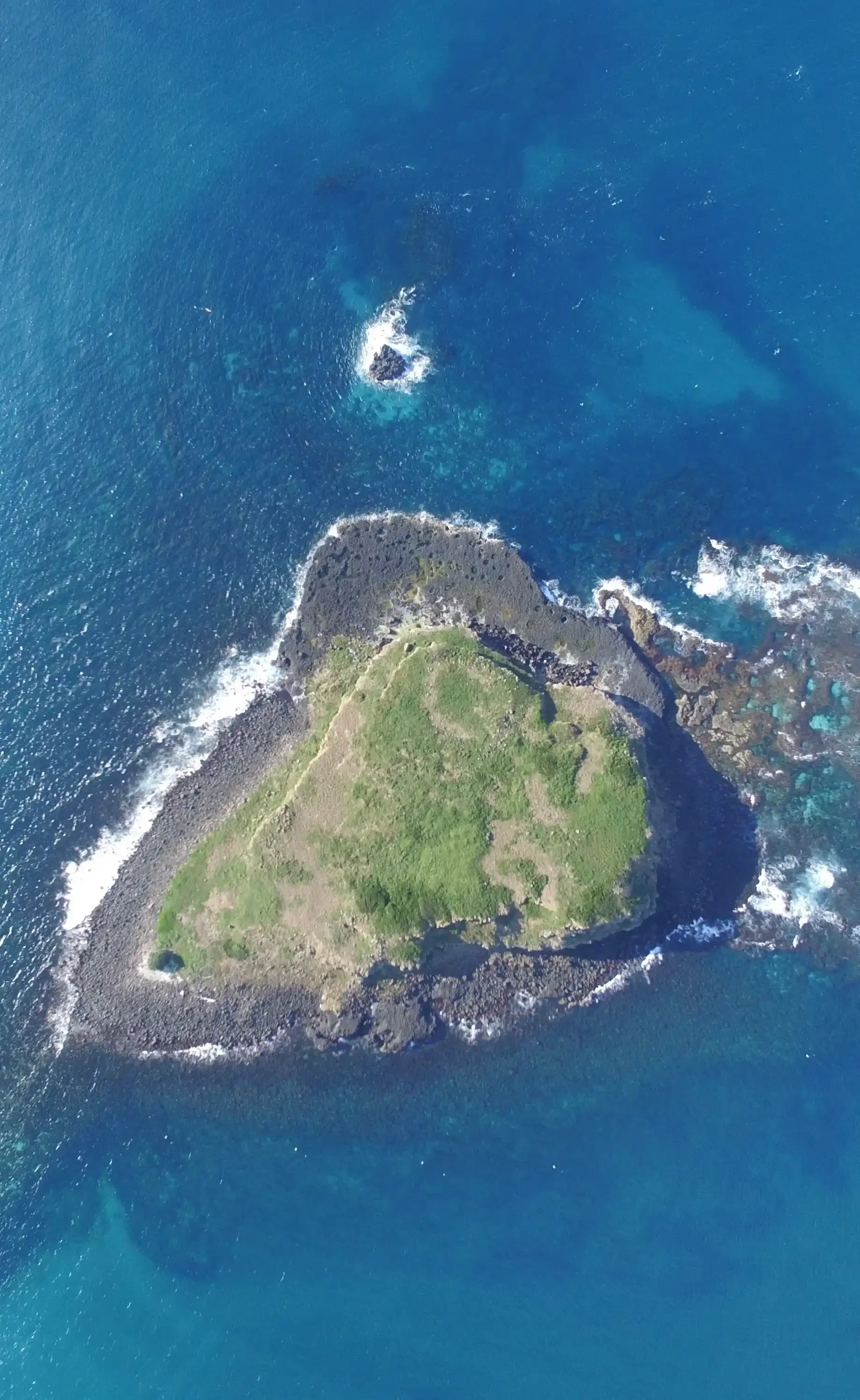
LOCATION
600M off Fingal Heads, NSW
Approximately 4 km south-east of Tweed Heads · Northern NSW · Just across the border from the Gold Coast.
78 ha
Marine Reserve
500m
Sanctuary
15 min
Boat Ride
YOU KNOW?
Fun facts about Cook Island
Same volcano as the Gold Coast
Cook Island and the Gold Coast hinterland were both shaped by the same ancient Mount Warning Shield Volcano making them geological cousins, 20 million years in the making.
13 permanent moorings
To protect the seabed, 13 permanent moorings are installed in the reserve so boats never have to drop anchor. Every anchor that doesn't touch the reef is a piece of coral that survives.
It was almost named Turtle Island
In 1823, explorer John Oxley found it so full of turtles he called it Turtle Island. Two centuries later, the turtles are still there in exactly the same numbers a remarkable conservation story.
Grey nurse sharks call it home
The critically endangered totally harmless grey nurse shark one of Australia's most protected marine species has been recorded inside the reserve. A reminder of just how special this ecosystem is.
"The place of pelicans"
The Bungjalung people knew this island as Joongurra-Narrian long before Europeans arrived. Pelicans still rest on the island today the name remains as accurate as ever.
Tropical meets temperate
Cook Island sits at a unique biological crossroads where tropical, subtropical and temperate marine environments meet producing a biodiversity hotspot with species found nowhere else along this stretch of coast.
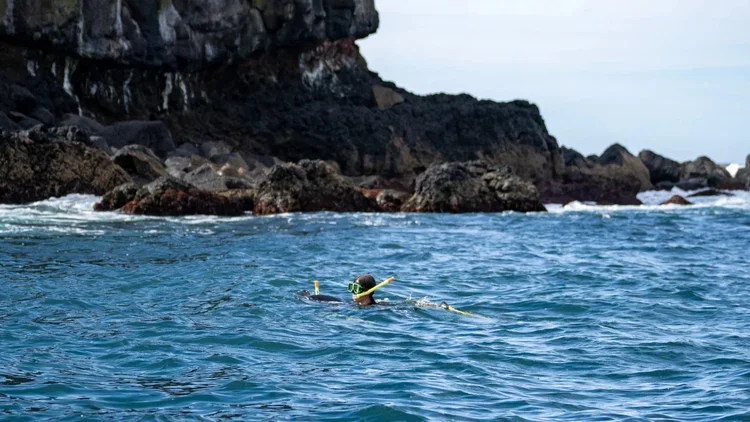
Shaped by fire, preserved by water
The same basalt lava flows that built Cook Island also created the spectacular hexagonal rock columns at Fingal Head, Australia's answer to Fingal's Cave in Scotland, and the reason the headland was given its name by early European settlers.
When you stand on the boat heading out to the island, the rocky outcrops you pass are 20 million years old. The reef below has had all that time to develop into one of the richest marine ecosystems on the east coast.
Most Iconic Residents
The turtles of Cook Island.
Three species of sea turtle call Cook Island home. On most tours, guests encounter 10 or more individuals close enough to watch them feeding, resting, and gliding effortlessly through the water.
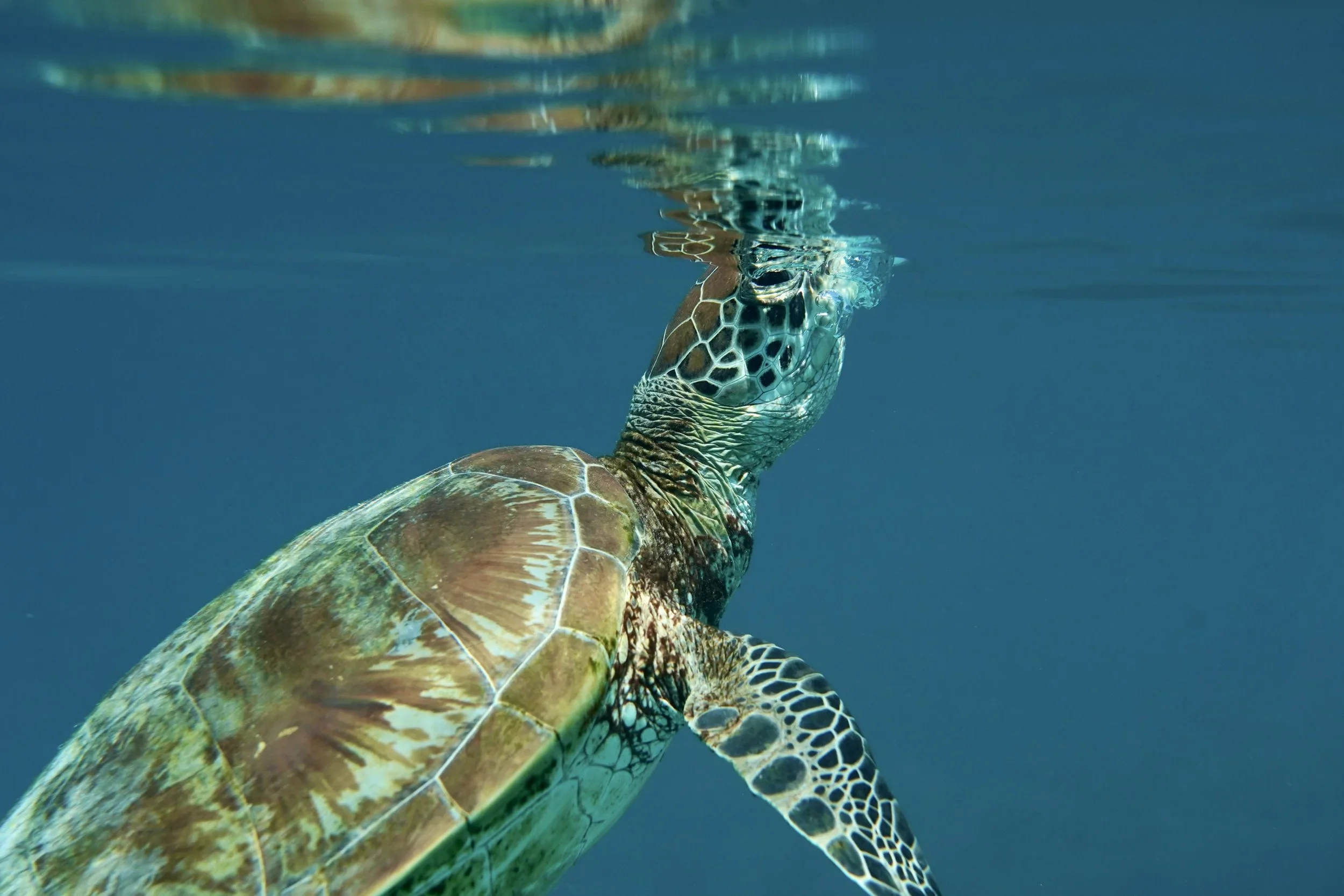
MOST COMMON
Green Sea Turtle
Chelonia mydas
The undisputed star of Cook Island. Green turtles are resident
here year-round, and their calm, curious nature makes for extraordinary snorkelling encounters. They'll often swim right alongside you, completely unbothered provided you follow the Turtle Code of Conduct.
Despite their name, green turtles are actually named for the colour of their fat, not their shell. Their smooth, olive-brown shells and small rounded heads make them easy to identify.
Size
Up to 1.2m, 135kg
DIET
Seagrass & Algae
LIFESPAN
80+Years
STATUS
Vulnerable
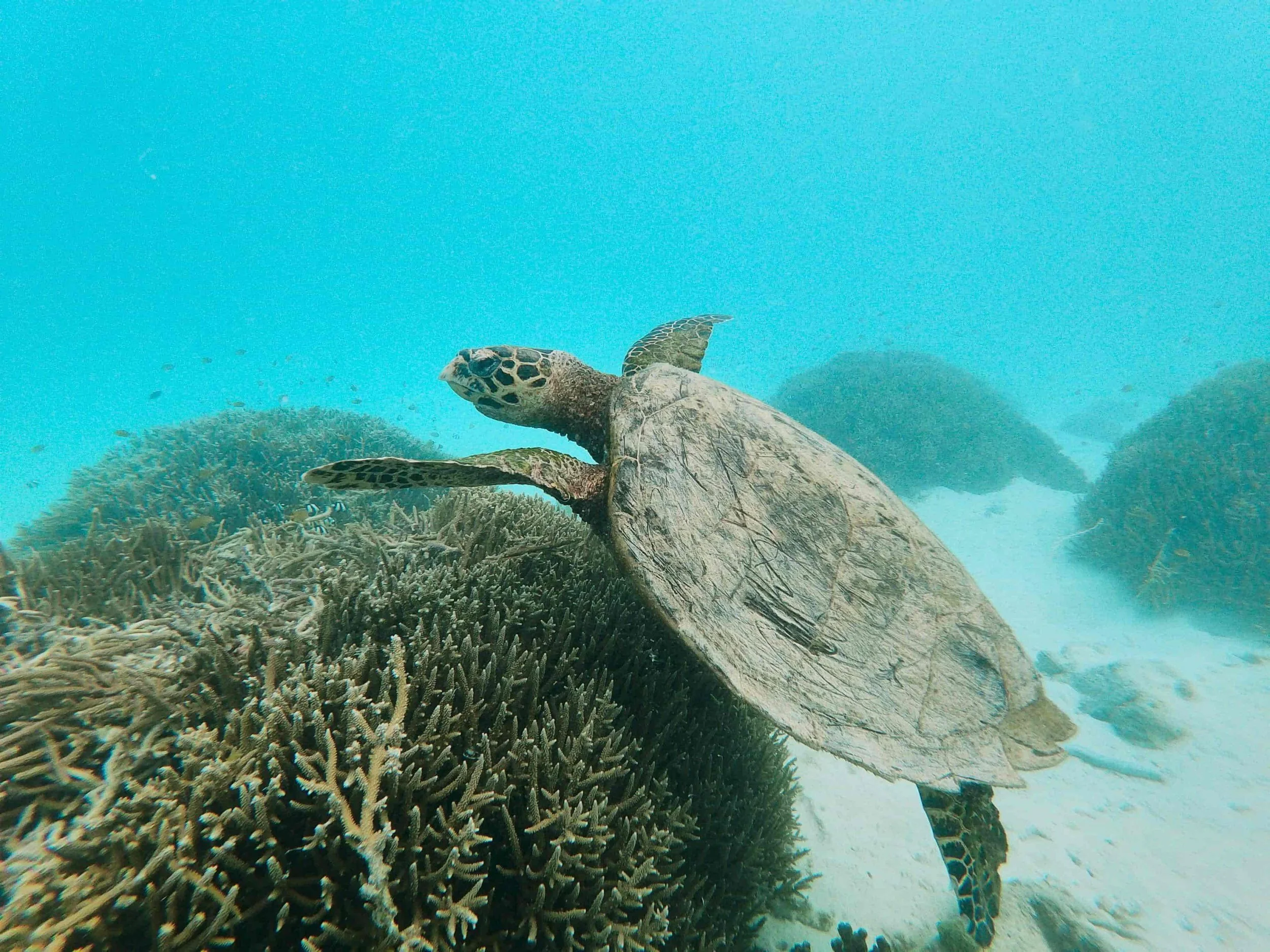
REGULAR
Hawksbill Turtle
Eretmochelys imbricata
Named for their distinctive narrow, pointed beak which looks remarkably like a hawk's bill hawksbills are specialist reef feeders. At Cook Island you'll often find them probing crevices and ledges for sponges and invertebrates.
Their beautifully patterned shells (called scutes) overlap like tiles, giving them a distinctive look that makes them easy to distinguish from green turtles.
Size
Up to 1 m, 80 kg
DIET
Sponges & Invertebrate
LIFESPAN
30-50 years
STATUS
Critically Endangered
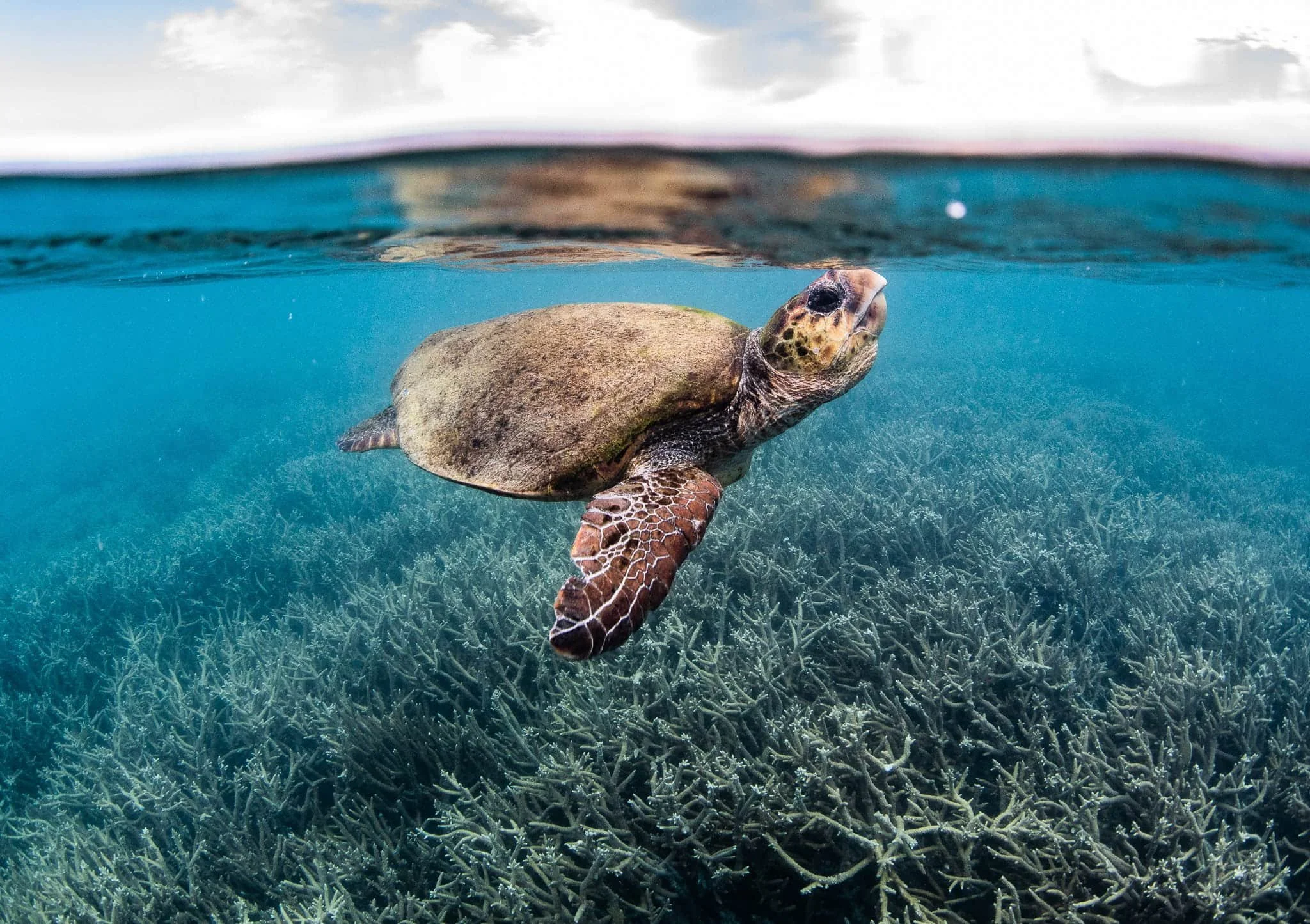
OCCASIONAL
Loggerhead Turtle
Caretta caretta
The largest turtle species found at Cook Island, loggerheads are named for their massive, broad heads and powerful jaws — capable of crushing hard-shelled prey like clams and crabs. When one glides past you, the sheer size of it takes your breath away.
Loggerheads are less common than green turtles here, making each sighting feel like a special bonus. Look for their reddish-brown shell and wide, blocky head.
Size
Up to 1.5m, 180kg
DIET
Crabs,clams & Jellyfish
LIFESPAN
70-80 years
STATUS
Vulnerable
Don't Worry — They're Friendly
Sharks, rays & other highlights.
Cook Island is home to several species of sharks and rays, none of which pose any threat to snorkellers. Seeing a leopard shark resting on the sandy bottom is one of the most memorable moments of any tour.
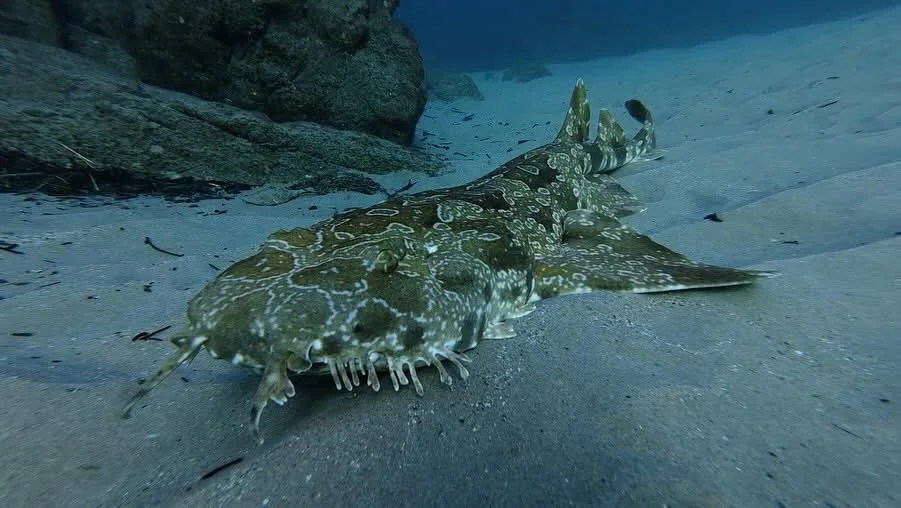
All year
Ornate Wobbegong
Orectolobus ornatus
A carpet shark and master of disguise — wobbegongs lie flat against the reef, their intricate patterning blending perfectly with the surrounding rock and coral. Spotting one that was invisible a moment ago is a genuine thrill.
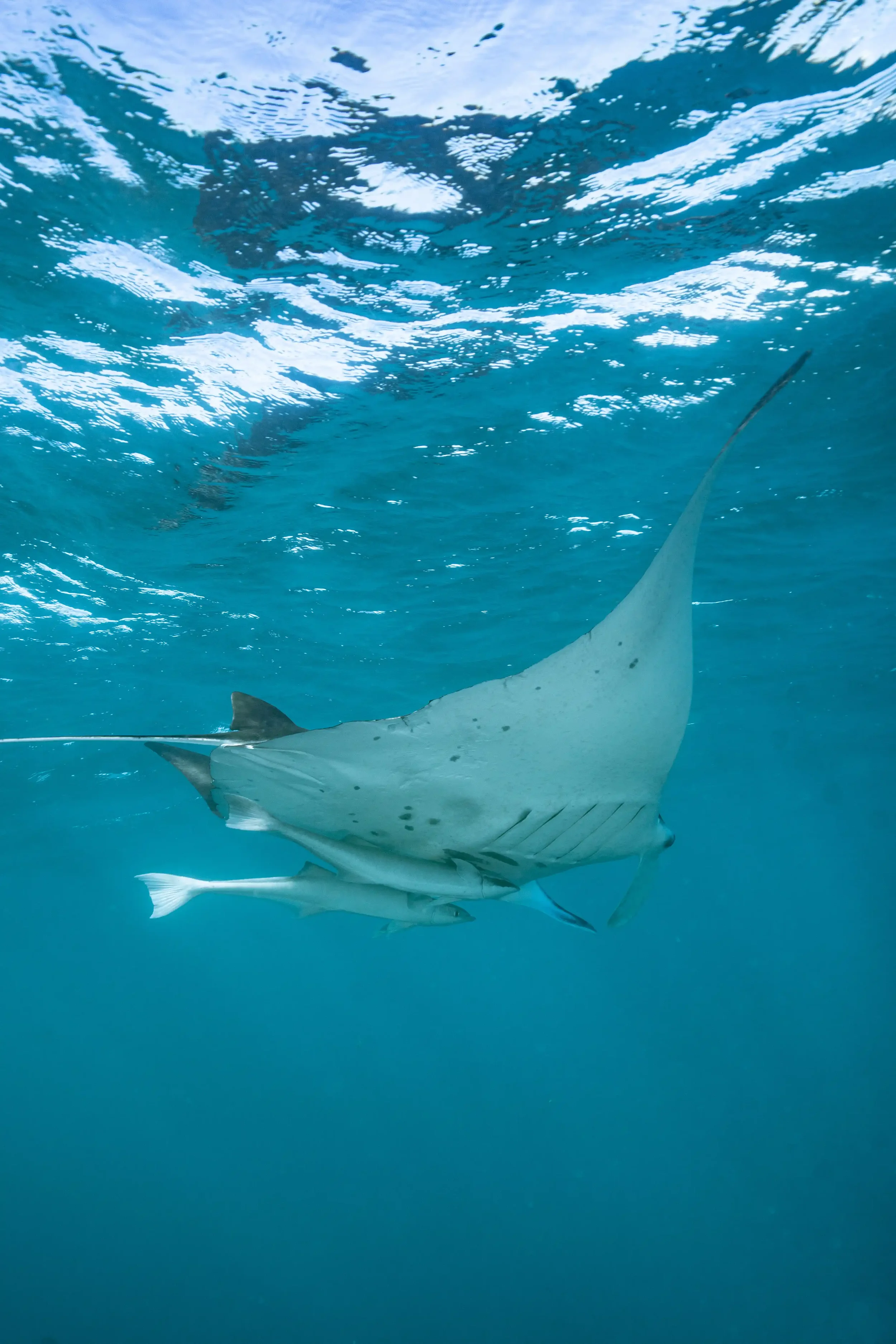
rare sightings during summer
Manta Ray
Mobula birostris
One of the ocean's most awe-inspiring creatures. Manta rays can reach up to 7 metres wingspan and move through the water with a graceful, effortless elegance that stops you in your tracks. A sighting at Cook Island is genuinely unforgettable.
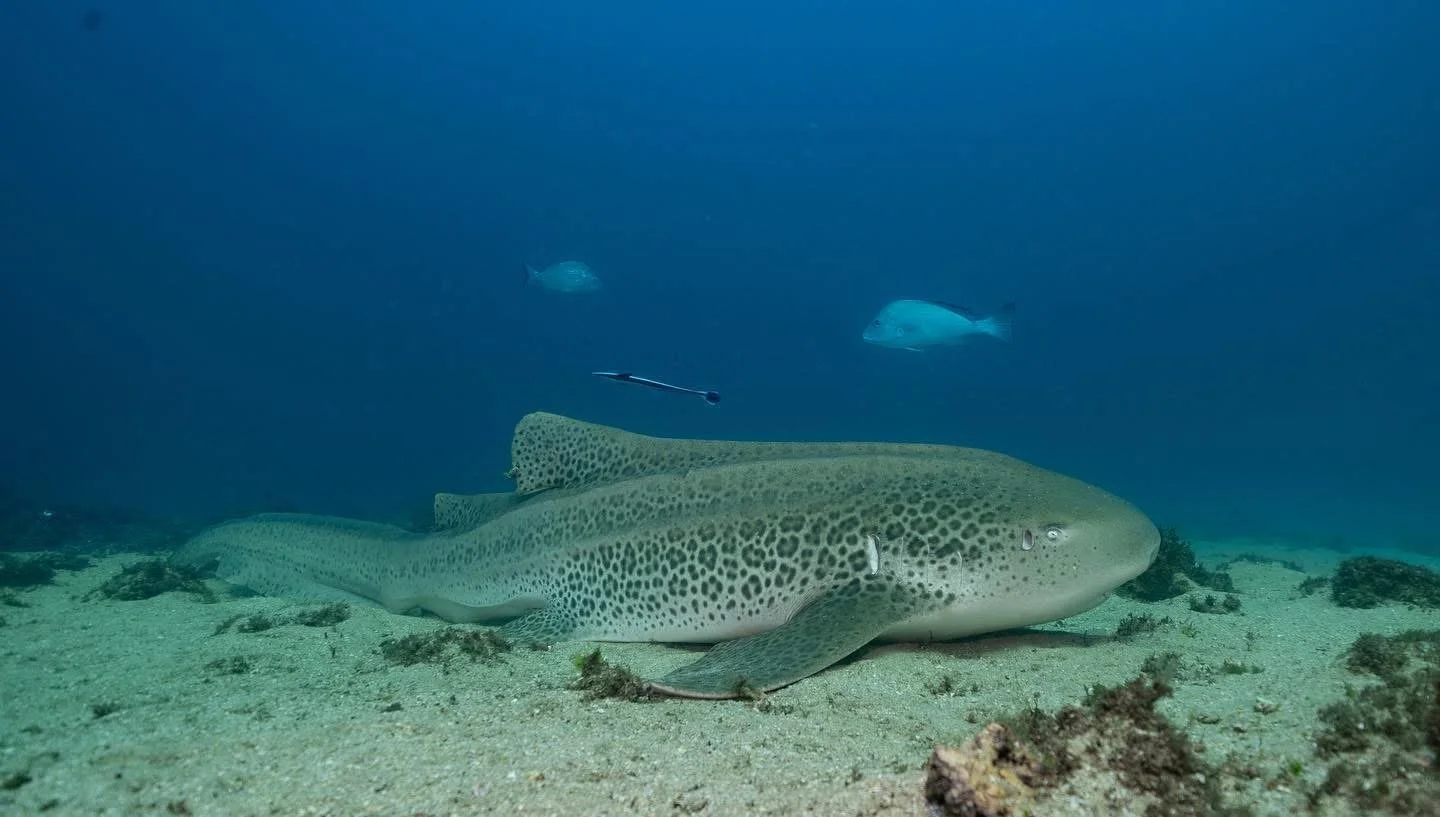
rare sightings during summer
Leopard Shark
Stegostoma tigrinum
One of the most stunning sights at Cook Island. These beautiful, spotted sharks are entirely harmless to humans and are usually found resting motionless on the sandy bottom, often in groups. Up to 3.5 metres long.
Reef Life
Hundreds of species at every turn.
Even setting aside the turtles, Cook Island's reef is extraordinary. Wherever you look, something is happening fish schooling, crabs scuttling, eels peering from crevices.
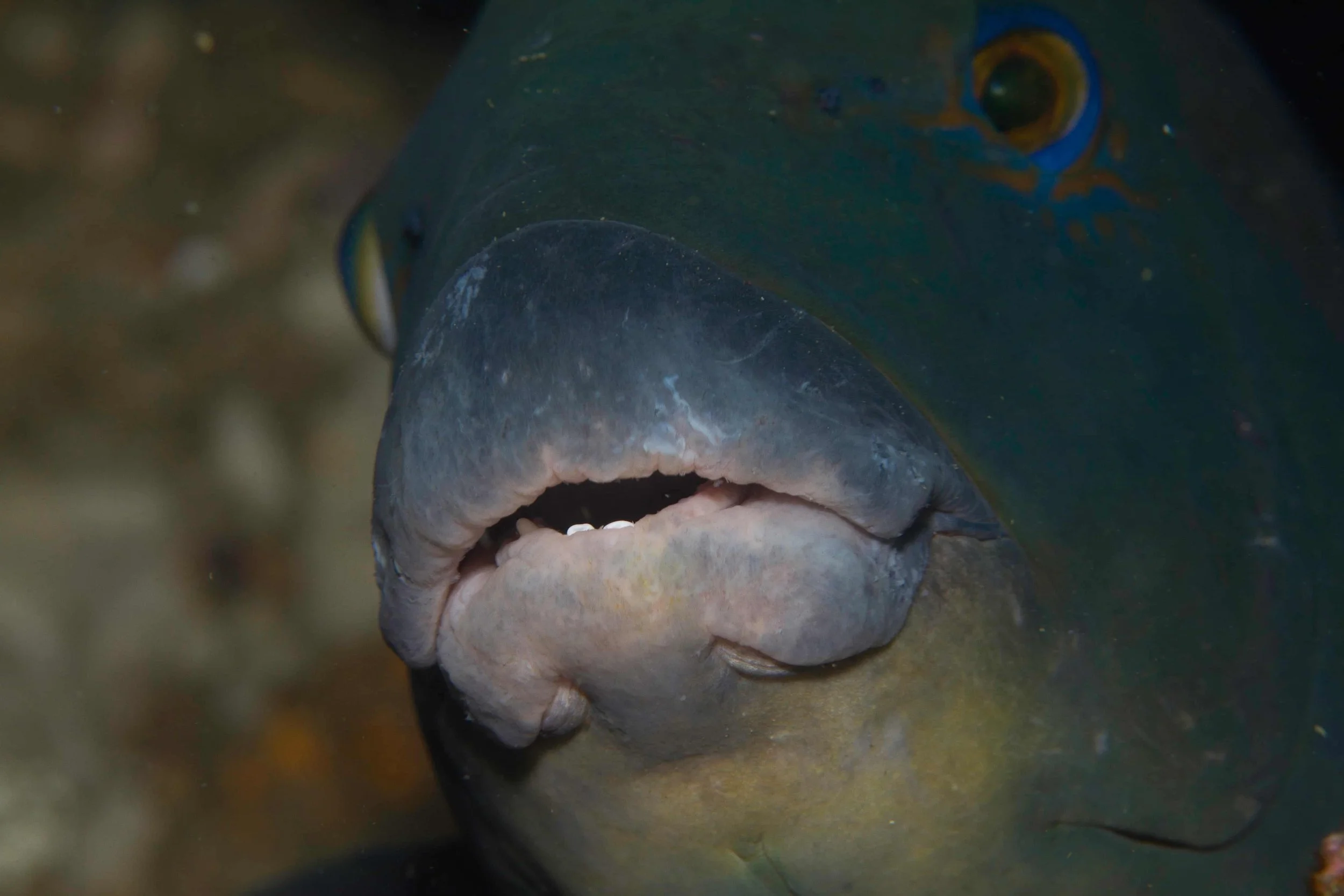
Blue Grouper
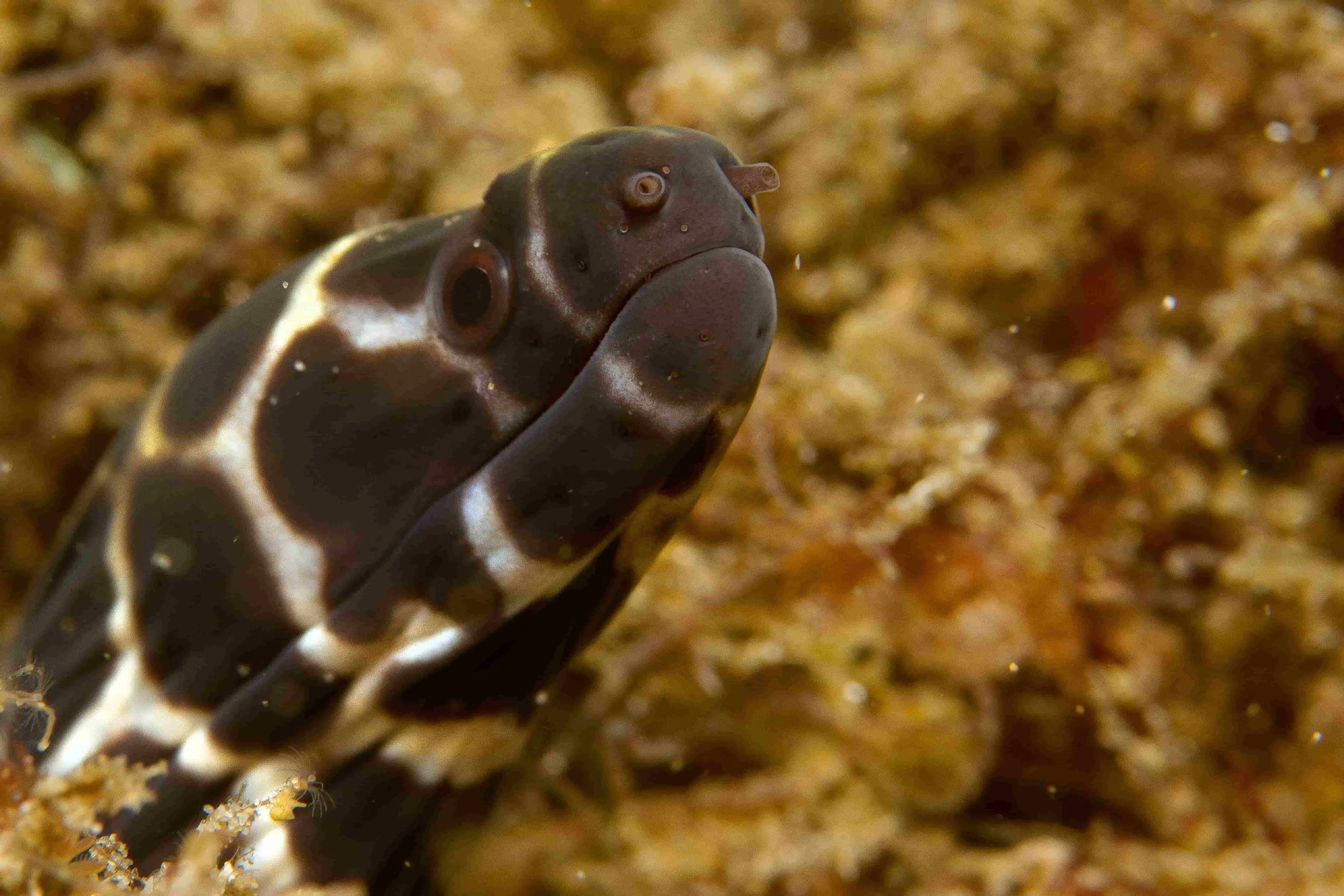
Moray Eel
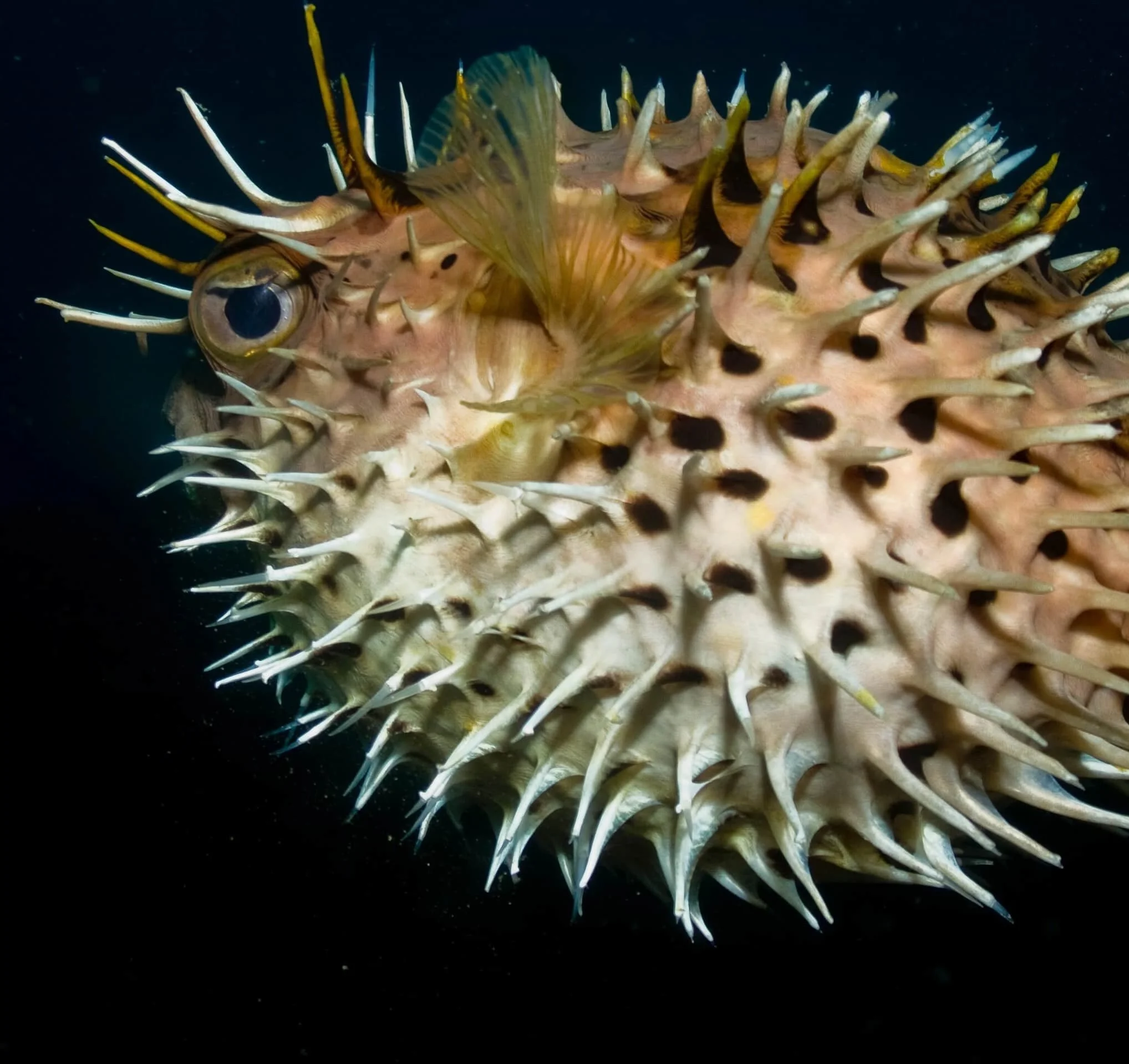
Pufferfish
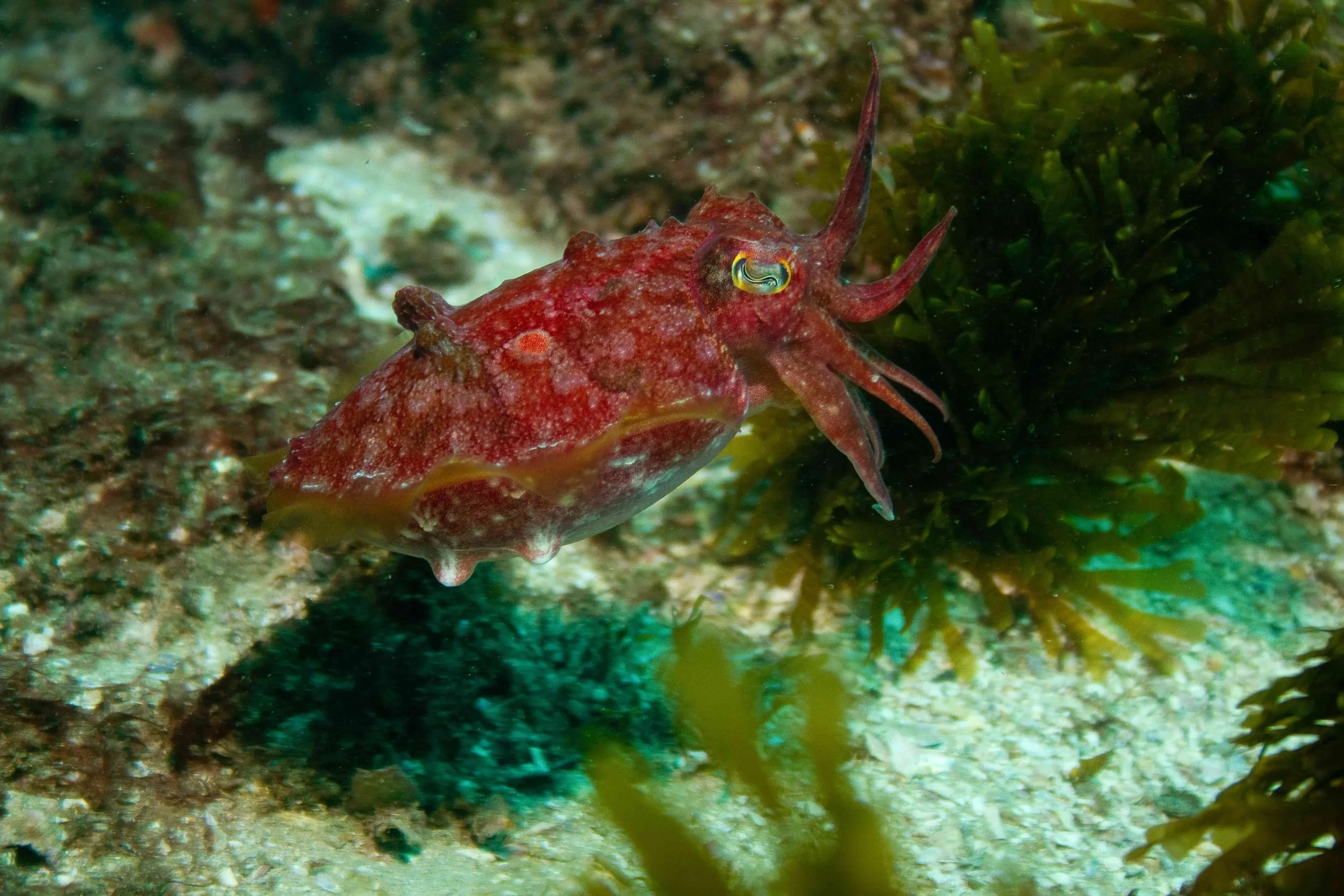
Cuttlefish
Also commonly spotted at Cook Island
Angelfish, Butterflyfish, Damselfish, Wrasse, Grouper, Triggerfish, Octopus, Sea Cucumbers, Nudibranchs
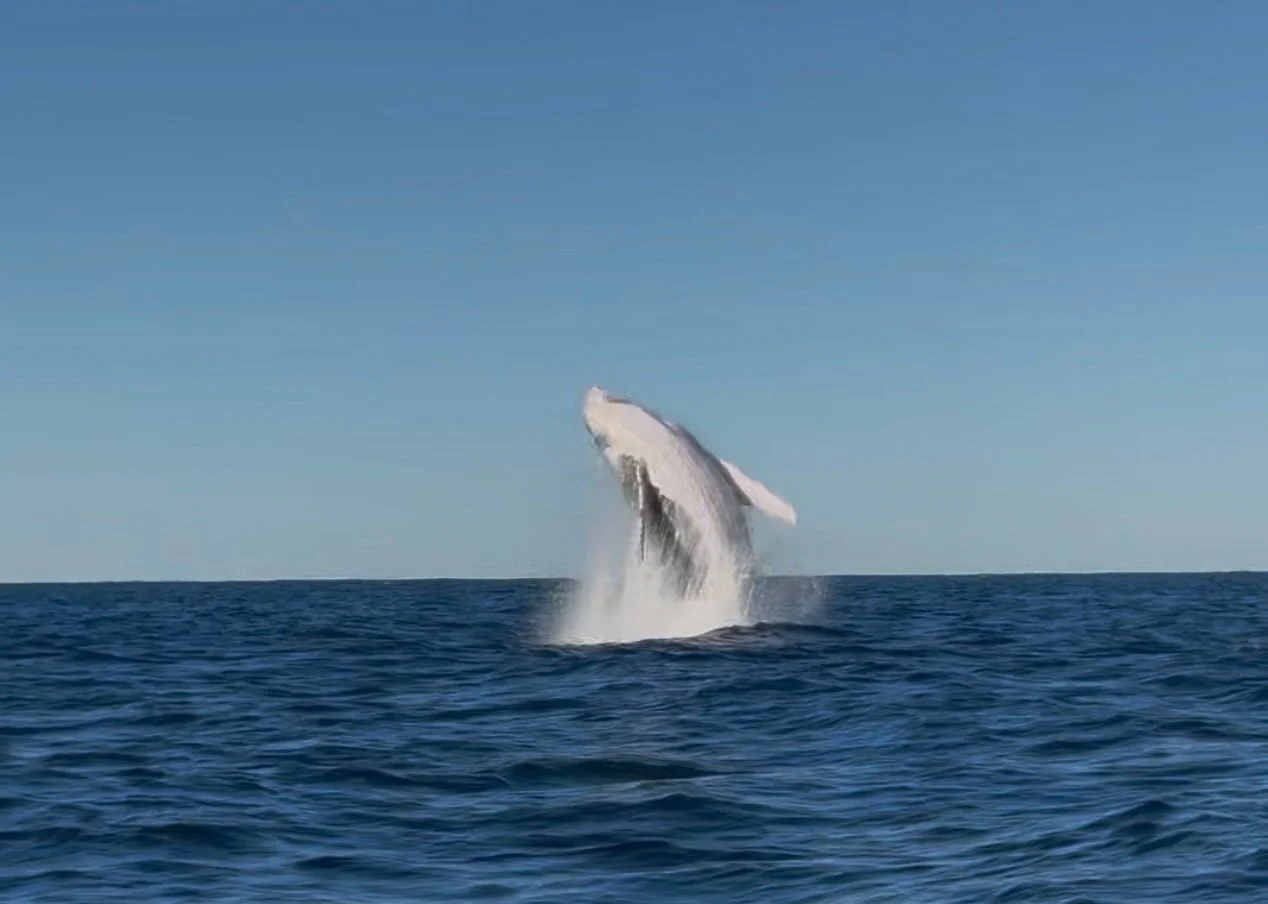
Humpback Whale Season.
Seasonal Experience
Between June and November each year, humpback whales migrate north through the waters off Fingal Head. This creates an extraordinary seasonal opportunity whale watching from the boat, and on select tours, the chance to slip into the water for an unforgettable whale swim.
Humpbacks can reach 16 metres and 30 tonnes, and their curiosity about humans makes for encounters that are genuinely life-changing. Our Whale Swim & Watch charter runs seasonally throughout migration season.
Season June -November
Peak Migration is June -October. Contact us to check for current whale activity
PLANNING YOUR VISIT
When is the best time to visit?
Cook Island is snorkellable year-round, but conditions vary by season. Here's what to expect.
☀️
Summer (Dec–Feb)
Warm water (24–27°C), excellent visibility. Turtles very active. Occasional afternoon storms can cause cancellations.
★★★★
🍂
Autumn (Mar–May)
Excellent conditions. Settled weather, great visibility, water still warm. One of the best times to visit.
★★★★★
❄️
Winter (Jun–Aug)
Cooler water (18–21°C) — wetsuits essential. Peak whale migration season. Often the clearest visibility of the year.
★★★★
🌸
Spring (Sep–Nov)
Water warming again, turtles very active, whales still passing through. A fantastic all-round season.
★★★★★
Ready to See It for Yourself?
You've read about them.
Now come meet them.
Book your turtle snorkel tour directly and get the best rate guaranteed. 15 minutes from the Gold Coast, a lifetime of memories.